Know your options
TMS compared to other treatments
TMS Our specialty
- Non-invasive, medication-free
- No anaesthesia or recovery time
- Minimal side effects (mild scalp tingling or light headache)
- Improves focus and cognitive clarity
- Outpatient procedure — resume daily life immediately
Medication (antidepressants)
A systemic treatment that can be effective for many people, but may require multiple trials for best results. Side effects can include weight change, fatigue, sexual dysfunction and nausea. TMS and antidepressant medication can also be used together.
ECT (electroconvulsive therapy)
Requires anaesthesia and a hospital stay. Seizure-inducing, with recovery taking hours to days. Common side effects: confusion, memory loss and fatigue.
Conditions we treat
Depression (including treatment-resistant) · Anxiety · PTSD · OCD · ADHD · Bipolar · Autism · Memory / cognitive impairment · Intellectual disability · Chronic Pain · Tinnitus, and more.
Referrals & Medicare
Is TMS covered by Medicare?
TMS can be delivered bulk billed under Medicare, if eligible, for treatment-resistant depression. To qualify, you must meet the following eligibility criteria:
- Adults aged 18+
- Presence of depressive symptoms
- Have tried at least two antidepressants
- Have not trialled TMS before
- No metal implants or seizure history
Our TMS psychiatrist
Dr Samuel Bryson
BIGS, MD, FRANZCP · TMS psychiatrist
How to refer
A GP or psychiatrist referral is required to begin treatment.
Accepting new referrals · Short waiting times (subject to availability). After referral, we run a safety screen and book a consultation with Dr Bryson.
Get in touch
Take the first step today
📍
In clinic
155 Marrickville Rd
Marrickville NSW
💻
Telehealth
Available
Specialist care wherever you are in Australia.
📞
Contact information
0451 633 639
Scan to book clinic or telehealth
psyencia.com.au
Psyencia
Neuromodulation Clinic
Transcranial
Magnetic
Stimulation
A safe, effective, non-invasive outpatient therapy — cleared by the TGA for depression.
TGA cleared
Medicare available
Telehealth
New referrals welcome
TMS — your questions answered
What is Transcranial Magnetic Stimulation?
TMS is a safe, effective, non-invasive outpatient therapy cleared by the TGA for depression.
At Psyencia, receiving treatment is convenient — our skilled and experienced staff ensure you feel comfortable during your visit and receive the best possible care.
How does TMS work?
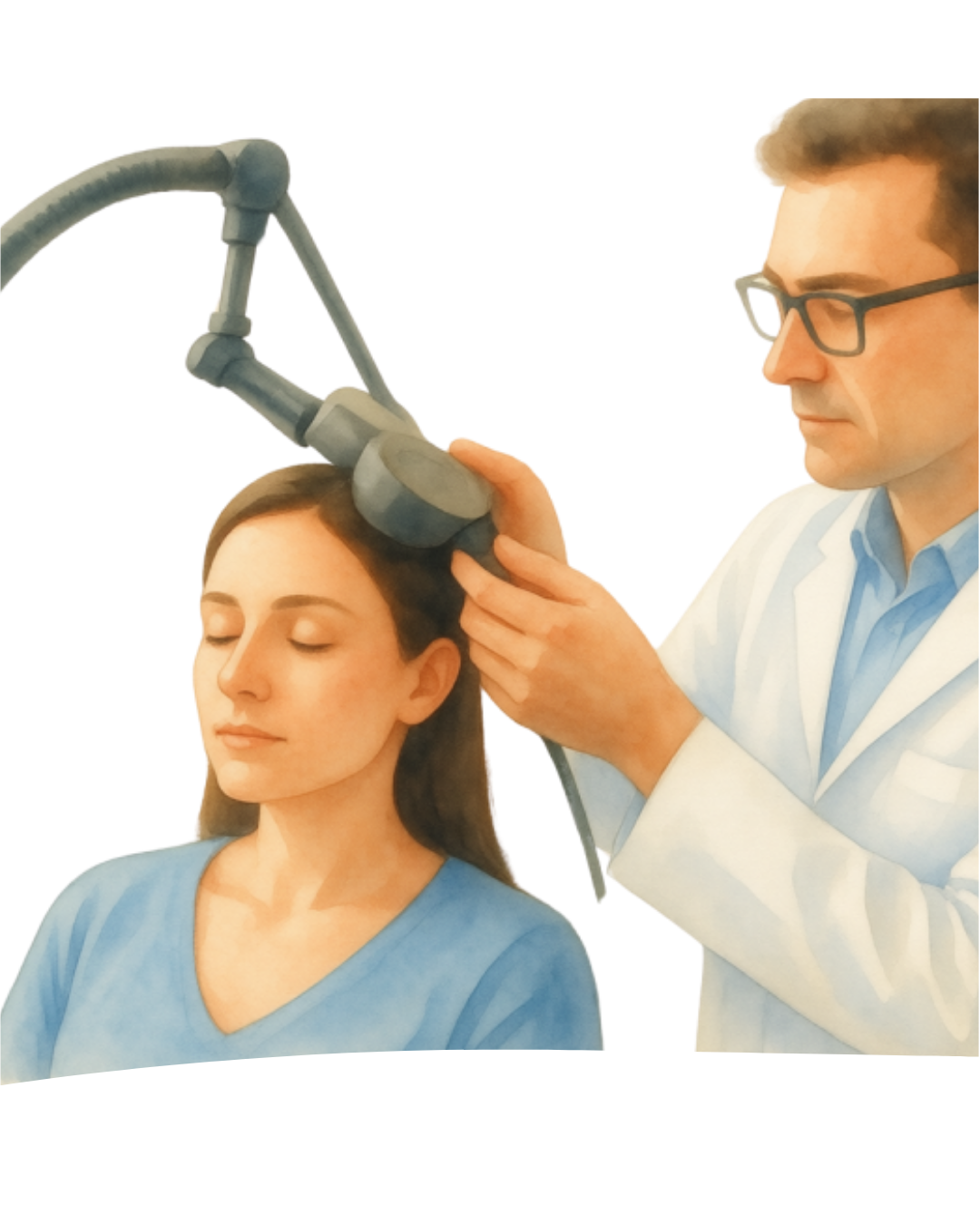
TMS delivers a series of brief electromagnetic pulses (similar to an MRI machine) to the part of the brain associated with mood. The pulses pass through the skull directly to the targeted area, where they increase blood flow and stimulate neurons in underactive regions.
Repeated stimulation releases neurotransmitters — the same ones linked to relief from depression, and to calming the symptoms and behaviours of OCD and other conditions.
Real results
How effective is TMS?
70%
(58%–83%)
of patients experience significant improvement
40%
achieve full remission
Results last for most people, with optional maintenance care available.
When should I consider TMS?
TMS may be an appropriate option if you have not benefited from medications, or if you have found the side effects of your medications intolerable.
When is TMS given?
An "acute series" is given five days a week, Monday to Friday, for six to nine weeks. Toward the end, our staff may recommend a gradual tapering schedule for the last few treatments.
Step by step
How do I start, and what happens?
1
Get a referral
Your GP refers you. Once we receive it, we reach out to complete a safety screen, then you meet a TMS psychiatrist to see if TMS is right for you.
2
Your first visit — about 1.5 hours
You recline comfortably while a TMS psychiatrist takes measurements to identify exactly where to place the magnetic coil on your head. You'll wear earplugs for the clicking sound and feel a gentle tapping from the pulses.
3
During treatment
The nurse positions the coil while your head stays still, and stays with you throughout. You're free to simply relax, chat, watch a psychoeducation video, or listen to music, a podcast or an audiobook.
4
Ongoing sessions — about 20 minutes
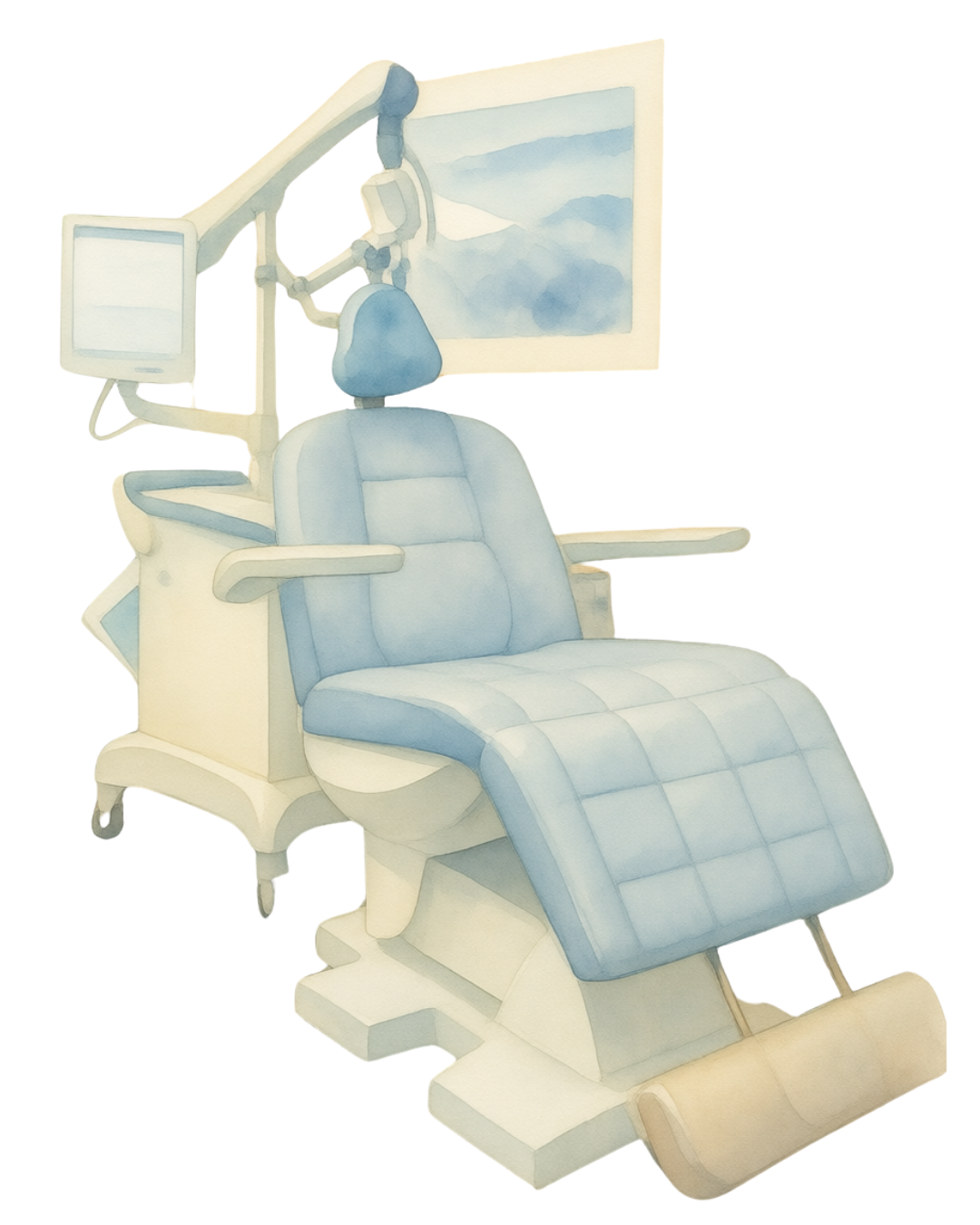
The chair is adjusted to your saved settings at every visit, so each session is quick and familiar.
You can drive yourself home afterwards and get straight back to your day — there's no anaesthesia and no recovery time.
Peace of mind
Is TMS safe?
What are the risks of TMS?
TMS is a very safe treatment. There is a rare risk of a generalised seizure — approximately 1 in 30,000 treatments (0.003%). Before approval, one of our certified nurses completes a thorough safety screen with you.
Are there any reasons I can't have TMS?
Some conditions prevent the use of TMS, such as a seizure disorder or metallic implants in the brain (for example, aneurysm clips or coils).
Does TMS have side effects?
The most commonly reported side effects are scalp discomfort at the treatment site and a mild headache, which may be relieved with over-the-counter pain medication.
Who looks after me?
Our skilled, experienced team makes sure you feel comfortable at every visit and receive the best possible care.
Ready to begin? Scan the QR code on the back cover or call us on 0451 633 639.